
South Florida
How to reduce heat and glare through your windows in Florida
6 min read
South Florida homes can experience intense daylight and glare through large areas of glass. A good solution starts by observing each window—not by applying the same fabric everywhere.
01
Why exposure matters
The amount and timing of direct sun affect glare, surface fading and how warm a room feels. Different orientations receive sun at different times, while neighboring buildings, roof overhangs and trees can change the result.
02
Solar screens
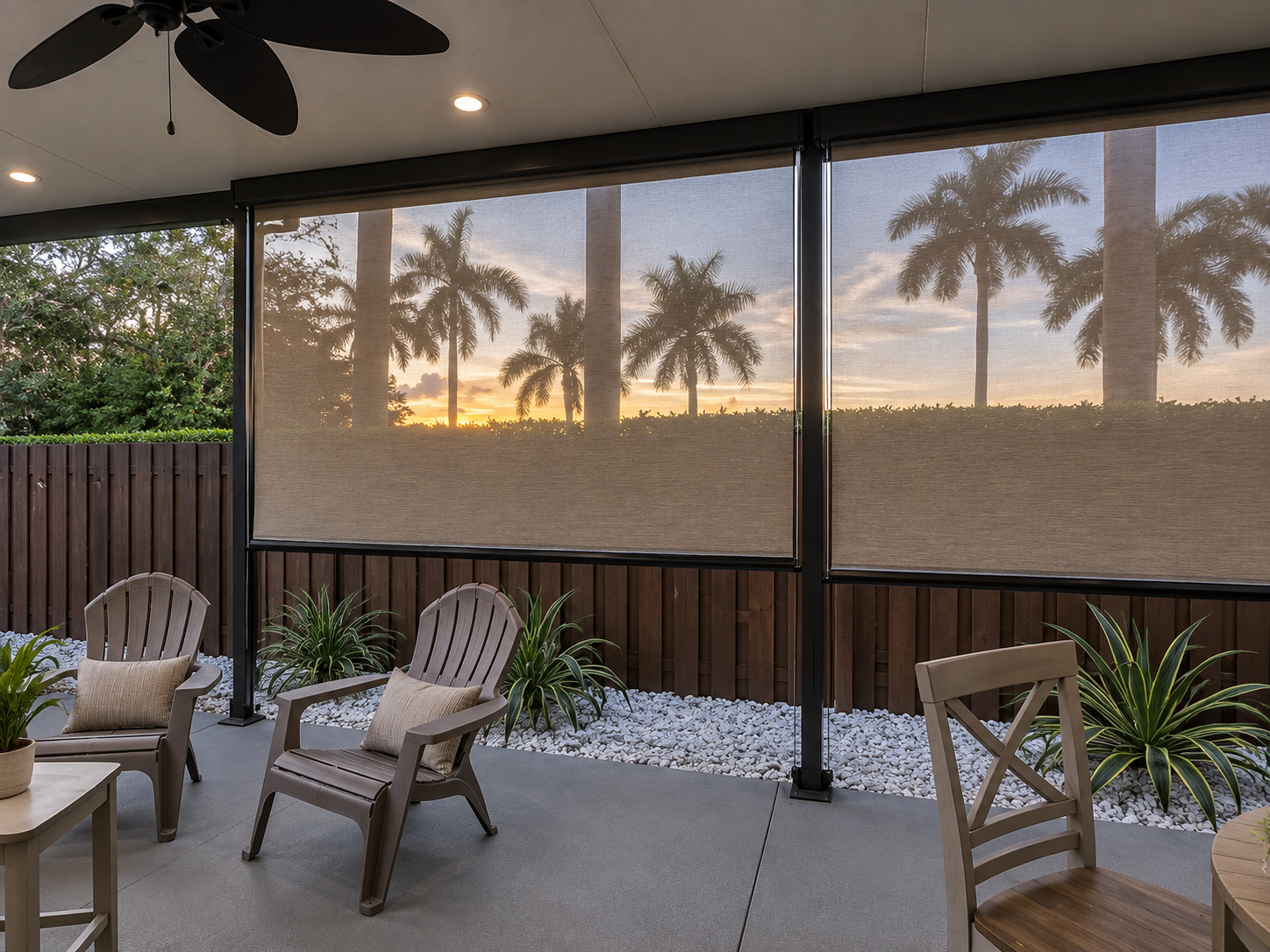
Solar screens are designed to manage glare and reduce solar radiation entering the room while preserving a degree of outward view. The exact balance depends on fabric construction, openness and color.
03
Fabric color and openness
Color, material and weave all influence thermal and visual behavior. A lower openness generally provides more solar control and privacy but less view. A higher openness preserves more of the exterior view with a different level of solar control. Compare actual samples at the window before deciding.
04
Blackout or solar screen?
Blackout prioritizes darkness and privacy; solar screen prioritizes glare management and retaining some view. Layering can provide flexible daytime solar control and stronger privacy or darkness when needed.
05
Interior, exterior and automation
Exterior shading can intercept sunlight before it reaches the glass, while interior treatments provide accessible control of light, view and privacy. Where compatible, scheduling shades around the hours of strongest exposure can help manage changing conditions without promising a fixed temperature or savings result.